Monday, April 12, 2010

Midwives by Chris Bohjalian

Summary and review:

Midwives is told from the perspective of Connie Danforth, a thirty-year-old woman. When Connie was fourteen, her mother, Sybil Danforth, was a midwife in rural Vermont. That March, Sybil was called to assist at the bedside of a laboring woman. During the labor, it appeared that the mother had died of a stroke and so, in order to save the baby, Sybil performed an emergency c-section on the woman with a kitchen knife. Sybil saved the infant, but the next day faced questioning from state police and was later arrested in the death of the mother. The book follows the Danforth family through the summer and into the fall of Sybil's trial.

My husband saw me reading this book and said, "Huh. Midwives. Sounds boring," and I have to say, this is not a book that your average male is going to feel comfortable reading. There is far too much talk of female anatomy for that. I am actually rather surprised that the author is a man. Maybe that's sexist of me but, it really is a compliment. I thought the predominately female characters were very believable, and I'd imagine it could be difficult for a man to write like that. And anyway, as the novel makes clear, the birthing room has historically been the woman's domain.

My reaction toward this book was kind of unusual. While I found myself being more and more drawn in to the life of Sybil Danforth and the outcome of the trial--I even had to stop a couple of times to remind myself that it was fiction--there were places when I was kind of bored. I had a hard time with the courtroom scenes in particular. Not to sound too cliche, but the posturing of the attorneys really irritated me, and all stereotypes about lawyers aside, I don't think Bohjalian meant for it to be that way. I really can't figure out how the book managed to be both compelling and tedious at the same time. There were a couple of spots during the courtroom chapters where I was tempted to skim ahead to read the verdict, much like I would have done if reading about an actual trial in a newspaper. I am glad I didn't; the end (like seriously, the very end) of the book was so, so good. I actually gasped when I read the last page, and it's been replaying in my head over and over again ever since.

I do have to take issue with the people who keep comparing this book to To Kill a Mockingbird. (Interestingly enough, on his website, Chris Bohjalian lists Atticus Finch as his favorite fictional hero). Okay, Midwives does feature a courtroom drama, and the narrator is a young girl (I'm going to sound prudish here but whatever, she was WAY too mature for my taste. Or not mature, depending on how you classify premarital sex, underage drinking, and drug abuse), but that does not make it To Kill a Mockingbird. This book is good, but not that good.

One thing that I really liked about the novel was that I finished reading and still didn't know know how the author, Chris Bohjalian, felt about the home births vs. hospital births (in this interview, Bohjalian says that although his daughter was born in a hospital, he and his wife would not hesitate to have a child at home). I had a baby less than a year ago, so I've heard a lot from both sides about the debate, and one thing that is not lacking in the argument is fiery opinions from both sides. Before I began to read, I expected to encounter a lot of propaganda from one side or the other, but fortunately the book was free of that. ★★★★★★☆☆☆ (6/10)

Content:

Blood and gore: Two words: emergency cesarean. There is some major home birth carnage going on here. Those of you with weak stomachs might want to steer clear of some of this.

Sex: besides the obvious (if there weren't any, Sybil Danforth would have been out of a job), there is some teenage experimentation and various parts of the female anatomy are discussed, but there isn't anything gratuitous.

Language: Mild

The Tourist by Olen Steinhauer

Summary and review:

For years, Milo Weaver was "a tourist"--a black ops agent for the CIA. His handler, the only man he trusted, was God, and, like the most fervent believer, Milo carried out orders without hesitation or question, no matter what was required. He had no name, no home, no family, and no past. Eventually, however, the life of tourism begins to take its toll. By 2001 Milo is hooked on amphetamines and weary of the endless cycle of new orders, foreign cities, and dead bodies, and he attempts suicide during a mission. The attempt fails, and immediately Milo is given another assignment, which he accepts with a weariness and resignation born of exhaustion mingled with long years of unquestioning obedience. This next mission, however, gives Milo the resolve to do what he has long been unable to do--retire. In Venice, with a near-fatal gunshot wound leaking blood from his chest, gripping the hand of a laboring pregnant woman, with the broken form of a young girl on the cobblestones beside him and the body of a former-colleague-turned-traitor a few yards away, Milo makes the decision to leave the world of tourism.

2007 finds Milo living in Brooklyn, with a name and a permanent address. He is no longer a field agent, having traded in his former life for a desk job, a wife, and a daughter. He is happy in his new life, but is brought back into the field when one of his closest friends is implicated in a plot against the United States. By accepting the new assignment, Milo descends back into the world of black-ops CIA. This time, however, Milo is a different type of tourist; no longer willing to work on blind obedience, Milo uncovers previously unseen elements of lies, manipulation and betrayal in his old cases and soon finds himself on the run.

I really enjoyed this novel. It reminded me a little bit of The Bourne Identity (the movie; I've yet to read the books)--extremely suspenseful with tons of twists. There were multiple times when I thought that Milo (and I) had figured out who the "bad guy" was, only to find out that there was someone else holding the strings. And The Tourist wasn't just some shoot-em-up James Bond-type story where the protagonist sleeps with the girl and shoots a bunch of people and asks questions later. Milo Weaver was a government-hired assassin with a conscience. It was really interesting to imagine the psychological ramifications that a "career" like this could have on a person, and I'm glad Steinhauer included passages where Milo struggled with what he left behind him in the wake of an assignment.

My biggest complaint about the book was the way Steinhauer used September 11 to bookend Milo's story. Milo's Venice assignment, the one that resulted in his retirement from Tourism, happened on September 11, 2001, and the book ended six years later on September 11, 2007. I couldn't figure out why Steinhauer decided to use this date, and it really bugged me. There were a few asides about the way the CIA changed after 9/11, and Milo complained a few times about post-9/11 airport security, but having the action take place on September 11 didn't further the plot in any way that I could see. I kind of think Steinhauer, who, as an American living in Hungary publishing novels with an American publisher, has probably enduring more than his share of post-9/11 flights, was annoyed with the airport security himself and thought it would be clever to title the Venice section "The End of Tourism."

Regardless, that's a pretty minor complaint. The book ends with a gigantic cliffhanger, so I suspect that we'll be seeing more of Milo Weaver, and I'm looking forward to it. ★★★★★★☆☆☆ (7/10)

Content:

Blood and gore: There are a lot of people getting shot, poisoned, thrown off balconies, and stabbed with HIV-infected shards of metal in this book. Be warned.

Sex: There are no sexual encounters described in this book. There are, however, two references to sexual abuse of children. While absolutely no details or descriptions are given, it is still a pretty disturbing.

Language: Bad. In addition to the usual suspects, the f-word is also used quite a few times.

Wednesday, April 7, 2010

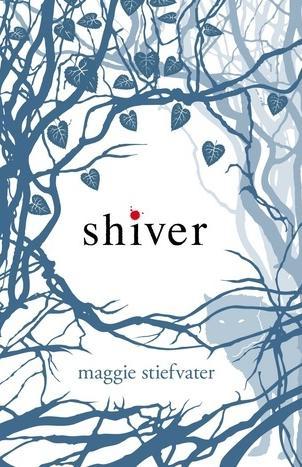
Shiver by Maggie Stiefvater

Summary and review:

Okay, here's the gist of Shiver: Ordinary teenage Girl meets, is in fact saved by, "Monster." Monster is not really a monster. Changed against his will from a human being, he longs to be human again and fights against the darker urgings that come with his new form. He joins with a group of fellow monsters, cobbling together a type of family, with a wise patriarch at its head who sets rules for the group and helps new monsters cling to their humanity. Monster and Girl fall desperately in love, and Girl wishes that she could be a monster, too. When that can't/won't happen, Girl then spends the rest of the trying to seduce Monster, who resists her advances despite his own desire.

Sound familiar? I know! The bare bones of Shiver are very similar to Stephenie Meyer's Twilight (yeah, like I had to give the author's name so that you'd know what I was talking about when I said Twilight). In fact, Sam, the main male character (who is a werewolf, not a vampire), even has yellow eyes. Actually, when I first read that about Sam I was like, "Crap. Stiefvater isn't going to pull a Stephenie Meyer and mention that repeatedly on every other page is she? Because seriously, I just won't be able to handle it." Fortunately however, although the yellow eyes were maybe mentioned a few more times than was strictly necessary, it never got too out of hand.

Anyway, yes, the basic plot of Shiver could be confused with Twilight, but, yellow eyes aside (okay, I guess, technically Edward's are amber. Whatever.), they are very much different books. I enjoyed reading Twilight; Stephenie Meyer is a great storyteller but let's be honest, she isn't going to be bringing home the National Book Award anytime soon. I don't necessarily think that Maggie Stiefvater is either, but her writing is, in my opinion, at least a little bit better.

The book is written with alternating points of view, switching off between Grace and Sam. I did find this distracting at times; instead of becoming lost in the story, I sometimes had to stop and remember who was narrating the chapter I was reading. However, the format made Sam a much more sympathetic character. I loved that I could see what was going on his mind, not just in Grace's. I could see why Grace fell in love with him, and I understood what was at stake because I actually knew and liked Sam. He was much more than just amber yellow eyes and the body of a young Greek god. (Okay, okay that was a low blow.) But the dual points of view didn't take away from the character development of Grace. Instead, it was made clear that she was her own person apart from Sam, and it made the longing between the two more stark by highlighting the lonely worlds in which they've grown up.

Stiefvater also put in bits of poetry, lines supposedly written by Sam, and excerpts from actual poets, particularly Maria Rilke, throughout the text. Parts of text were actually written in a kind of free verse form. Normally this would bug me, in Shiver, however, it did not. I thought Sam's poetry was sweet and romantic but not overly cheesy, and the lines from other poets were appropriate and furthered the plot rather than taking away from it.

The setting is beautiful, as well. You can feel the cold of the Minnesota winter sinking into you. It's in every way a perfect book to read while curled up on the sofa with a cup of hot cocoa. ★★★★★★☆☆☆ (7/10)

Content:

Blood and Gore: There are several wolf attacks in the book and a lot of blood everywhere all the time, it seems.

Sex: There is a lot of sexual tension going on between Sam and Grace, pretty much the whole time. No graphic descriptions, but Stiefvater makes it pretty obvious from the outset that something is going to happen. And it does. Oh, but don't worry, she makes sure to tell us that they used protection. Whew.

Language: There is quite a bit of blasphemy and some "minor" curse words. No f-word.

Lamentation by Ken Scholes

Summary and Review:

Lamentation
begins with a holocaust. Windwir was a city of scholar-priests built around the knowledge, amassed for millinnia, of an ancient world. On the day the book begins, it is destroyed, along with the priests of the Androfrancine order who guarded Windwir and its secrets. All that is left of the city is a pile of ash and bones, and a column of dark smoke rising into the sky, a beacon to the surrounding people telling of the horror that has occurred.

The destruction of the city brings together a group of strangers: Neb, an apprentice to the Androfrancine order who witnesses the destruction of Windwir from outside the city walls and, in an instant, loses everything and everyone he has ever known. Sethbert, Overseer of the Entrolusian City States, rules the land bordering Windwir and claims responsibility for its destruction. The Lady Jin Li Tam is his beautiful and cunning consort and a longtime spy for her father in Sethbert's household. Rudolfo, Lord of the Ninefold Forest Houses, seems to lead a foppish, indulgent life, but in reality is a canny military leader with the complete devotion of the men he leads. Petronus is a humble, aging fisherman whose past life weighs heavy upon him, and Vlad Li Tam, father of Lady Jin Li Tam, is a powerful ruler playing a cunning game of statescraft. His machinations into the lives and destinies of others extend deeper than anyone knows.

In the wake of Windwir's destruction, these players will contend for power in a world without the leadership once vested in the Androfrancine brethren. The followers of the light must restore order to the world and salvage the light of knowledge which was once held in Windwir.

There were a few things in the book that bothered me. For instance, one of my least favorite elements of fantasy fiction is the tendency for authors to come up with hard-to-remember and impossible-to-pronounce names for the places and people populating their fantasy worlds. Ken Scholes was no exception to the rule. The names in the first dozen pages of the book nearly convinced me to give it up and move on to something else: P'Andro Whym, Xhum Y'Zir, The Wizard King Aelys, Franci B'Yot, and, my least favorite, Glimmerglam. Why do fantasy novels always have to feature places with names like Glimmerglam? To be fair, Glimmerglam is not impossible to pronounce, but still. Blech. Scholes also had an irritating habit of capitalizing things that didn't need to be capitalized and having his characters mentioning events and people without giving any background to them whatsoever. So annoying. Also, while I was very grateful that there were no explicit descriptions of sexual encounters, some of the references to them were almost worse than hearing the real thing. In describing a couple's first night together, Scholes writes that the male character "had laid his seige, bribed her sentries, eventually, taken the city." Later, when that male character turns out to be infertile or something, Scholes writes, his "soldiers might be swordless, but they needed no marching instructions." Have you ever read anything more cringe-worthy? Oh, that's just bad.

However, I did like Lamentation, much more than I initially expected to. It kept me guessing. The layers of political intrigue were complicated and intense, difficult to follow at times, but always interesting. I enjoyed unwinding the plot and discovering more of the intrigues and manipulations along with the characters. Although most of the characters were relatively standard for a fantasy novel, the elements in the book were surprising--robots, magic, dream prophecy, science, and religion. It's fitting that the weapon which destroyed Windwir was like the 10 plagues of Egypt meet the A-bomb. I thought that the character development was good. You saw the characters learn, develop, face difficult decisions, and challenge many of their fundamental beliefs. This was the case for most of the main characters, Petronus, Rudolfo, Jin Li Tam, and Neb, in particular.

There were also a number of details in the book that were clever. I liked the characters' use of sign language and the complex codes they used in their messages. I really liked many of the secondary characters as well, such as Gregoric, Grymlis, and Oriv (you'll have to read the book to find out who they are). And I liked the way the romance stood at the conclusion of the novel. Without giving too much away, it was dissatisfying in a strangely satisfying way, and seemed true-to-life. ★★★★☆☆☆☆☆☆ (6/10)

Content:

Blood and Gore: It's a war novel brought about by the destruction of an entire city, so, yeah, there's some violence. A lot of people get their throats slit, it seems, and there is also mention of a rather unsavory group of institutionalized experts of torture.

Sex: Mention of prostitution and way too many cheesy references to sexual encounters. No explicit or graphic descriptions, however.

Offensive Language: There are a few "minor" curse words, but not many. The book also uses a number of pejorative terms for women.

Tuesday, April 6, 2010

Sanditon by Jane Austen and "Another Lady" (Marie Dobbs)

Summary and Review:

I love Jane Austen and have read each of her novels multiple times, so you can imagine my excitement when I heard about Sanditon, Austen's last-attempted, unfinished novel, which was begun less than six months before she died. Austen only finished 11 chapters of Sanditon, which she originally titled, "The Brothers," before she passed away. She bequeathed the manuscript to her niece, and work on it has been completed by several different authors. The version I read was originally credited only to Jane Austen and "Another Lady," but subsequent editions revealed the author's name to be Marie Dobbs. The author bio on the back of the book claims that "Another Lady" is a "pseudonym for a novelist who lives in England;" however, I was unable to find any other works written by Dobbs. She is however, obviously an Austen aficionado, with a clear understanding of Austen's writing style. I believe she finished the novel beautifully.

Sanditon begins when Mr. and Mrs. Parker, a young married couple traveling home from London, overturn their coach. The Parker's are thus compelled to accept the hospitality of the Heywood family for two weeks while their coach is repaired and Mr. Parker's ankle, which was sprained in the accident, heals.

Mr. Heywood is a gentleman farmer with fourteen children. He and Mrs. Heywood live comfortably but frugally, and rarely travel outside the bounds of their parish, Willingden. Despite Mr. Parker's best efforts, they cannot be convinced to accompany the Parkers back to Sanditon, an emerging resort town in which Mr. Parker has invested, and which has become his new obsession. With her characteristic humor, Austen informs the reader that "Sanditon was a second wife and four children to [Mr. Parker], hardly less dear, and certainly more engrossing." The easygoing Heywoods, however, agree to allow their eldest daughter, Charlotte, to accompany the Parker's to Sanditon for the rest of the summer, which is where the real Austen-action begins. In Sanditon, Charlotte is introduced to the polite society of the seaside resort and, away from her family for the first time, she meets new sides to her own personality which she never before knew. Charlotte prides herself on being level-headed and and sensible; however when she is introduced to Sidney Parker, Mr. Parker's charming and good-naturedly manipulative younger brother, she meets her match. Despite her best efforts, it seems that Charlotte will find romance on her summer holiday.

The characters in Sanditon will be familiar: although the population of Sanditon is small (much to Mr. Parker's chagrin), all of our favorite Austen archetypes are on the scene. Charlotte is reminiscent of Elizabeth Bennett from Pride and Prejudice. She is charming, sensible, witty, and high-principled. She is also attractive, although certainly not the most beautiful girl to grace Sanditon's social scene. Like Elizabeth, she tends to sit back and survey those around her with an amused, and at times self-satisfied, air. The hero, Sidney, reminds me of Henry Tilney from Northanger Abbey, educated, sarcastic, charming and flirtatious, albeit extremely confusing at times for the heroine. Clara Brereton seems an easy match for Jane Fairfax, the beautiful, mysterious, sometimes-foil of the heroine. And of course all of our other Austen favorites are there as well--Lord Edward is Mr. Collins meets Henry Crawford, and his sister, Miss Denham, channels Caroline Bingley. We have the kind but bumbling Mr. and Mrs. Parker, the frivolous Miss Beauforts, the hypochondriac Miss Parkers, and the haughty Lady Denham. Of course none of the characters is a carbon copy of anyone from Austen's other works. Each is delightfully unique, with his or her own quirks, yet they all fit seamlessly into the world that Austen's readers know and love. The biggest departure character-wise, in my mind, is Miss Lambe. She is a sickly heiress from the West Indies who is mulatto, to my knowledge the only character of color in any of Austen's works. Although I don't know how Austen originally intended this character to be used, the storyline created for her by Dobbs is probably my very favorite in the entire book.

I loved Sanditon. I could not have identified the spot where Austen's manuscript ended and Dobbs picked up the narrative without the "Apology from the Collaborator," which Dobbs included at the end of the book. In the apology, Dobbs humbly excuses herself, explaining that she is no Austen. However she comes much closer than I expected. I haven't read any other continuations of this novel, but I can't think they'd get much better than this. Although the plot twists at the end of the novel were a little less subtle than what one would expect from Austen, the book still sparkles with her humor, sarcasm, delightfully biting wit, and flair for the perfect romance. I think that any Austen fan would love Sanditon. ★★★★★★☆☆ (8/10)

Content:

Blood and Gore: N/A
Sex: N/A, although one of the female characters is abducted by a male character with dubious motives
Offensive Language: N/A

Tuesday, March 30, 2010

The Case of the Missing Servant by Tarquin Hall

Summary and review:

Vish Puri is the force behind India's "Most Private Investigators, Ltd.," an award-winning outfit that has solved the most baffling cases, from homicides to political intrigues to matrimonial stake-outs. Vish Puri is stout, has a carefully groomed and curled mustache, and is never to be seen without one of his tweed Sandown caps (his collection is imported from Jermyn Street in Picadilly), which pair beautifully with his new, always carefully pressed, gray safari suit. He is also clever, has stellar connections, loves disguises, and never fails to solve a case by using old-fashioned detective skills, persistence, and the art of deduction. But don't compare him to Sherlock Holmes, who, in Vish's opinion, merely copied the methods first set down thousands of years ago by Vish's guru, Chanakya, the Indian philosopher who established the art of investigation.

The Case of the Missing Servant is the first installment of what is to be a detective series by Tarquin Hall, a British journalist who has spent his career in south Asia. The case involves an honest public litigator is who is accused of murdering Mary, one of his family's servants who has mysteriously disappeared from his home. As nothing, not even Mary's last name, is known about the girl, this case stretches even Vish Puri's detective skills. At the same time, he is dealing with his overprotective "Mummy," an attempt on his life, his wife's insistence that he forgo delicious but artery-clogging Punjabi food, and a matrimonial case that is not as simple as it first appears.

Vish Puri is a great main character. More than a little sure of himself, he nevertheless seems to deserve the credit he gives himself, which makes him a sympathetic character, and his ego adds spice and humor to the novel. I loved the the nicknames given to characters in the book, Chubby, Tubelight, Facecream, and Flush. Although the plot was interesting and had a number of twists and turns, the book wasn't particularly suspenseful. I never feared for Vish or any of his compatriots, and I didn't know his client, Ajay Kasliwal, well enough to be overly concerned for what happened to him.

I've never been to India and don't know much about it, but this book makes me feel as if I've experienced it in all of its incarnations--fascinating, disturbing, colorful, raw, modern and traditional. There is an extensive glossary at the back of the book which includes words in Hinid, Punjabi, Sanskrit, and Nepali. The glossary was very interesting, and the use of the non-English words and terms definitely added to the atmosphere of the book; however it was distracting at times to have to flip to the back of the book to find a word's definition. ★★★★★★☆☆☆☆ (6/10)

Content:

Blood and Gore: There are descriptions, though not graphic, of the murder victim's body

Sex: The missing servant may have been raped, and there are several sexual innuendos throughout the book, as well as mention of adultery.

Offensive Language: There is some blasphemy and "minor" swearing in English. In addition, the Punjabi equivalent of the f-word is used and then translated in the glossary.

Prayers for Sale by Sandra Dallas

Summary and review:

Hennie Comfort is an eighty-six-year-old woman who has lived in Middle Swan, Colorado, a mining town situated high in the Rocky Mountains, since leaving Tennessee over 70 years ago. Hennie is, in many ways, the glue that holds the rough mining town together. Befriending everyone from the wife of the president of the mining company to the various "sorry girls" who entertain the men of Middle Swan. This story is about Hennie's friendship with Nit Spindle, a seventeen-year-old newlywed girl who has recently arrived in Middle Swan with her husband. Lonely in her new town and grieving over the loss of her baby, Nit is drawn to the sign hanging over Hennie's home, "Prayers for Sale." When she approaches Hennie to ask for a prayer, a deep friendship is born between the two women. Despite their differences in years, Nit and Hennie are drawn to each other by their love of quilting, their need for friendship, and the tragedies that they have each experienced. Throughout the book, Hennie unfolds the stories of Middle Swan to Nit, by doing so, she is able to confront the darkness of her past and embrace the future.

Sometimes I felt like I was looking at an early draft of the book. The stories that Hennie told seemed unfinished, since they were told without dialog and through the point of view of the third-person narrator. One of the themes in the book is Hennie's story-telling ability, but I never heard her voice in the stories. There were also a number of repetitions: we are reminded constantly that Hennie does not want to leave Middle Swan to live in Iowa with her daughter and that she has some unfinished business to take care of before she leaves. It is clear that Sandra Dallas knows quite a bit about both quilting and life in mining towns, but at times it seems like a little too much. There were places in the narrative that seemed to be trying to educate the reader, rather than telling a story and letting little facts about life in a mining town be gleaned along the way. For instance, on page 74, Hennie is perusing the shelves in the town's general store:

"Another shelf held the tin bins of spices and sultanas. The lettering identified them as sultanas yet, but most everybody called them raisins now, and they no longer had to be stoned."

I read these sentences and thought, "Hmm. I guess raisins used to be called sultanas. Now I know." Instead of fleshing out the atmosphere of the old store, the passage totally pulled me out of the story.

Hennie was maybe just a little bit too perfect, she didn't seem to have a single weakness. Giving Hennie a few more flaws would have made it easier to relate to her, but I didn't mind all that much. Instead, I just really wished that I were her neighbor. Although some of Hennie's stories were sad and dwelt on the darker side of human nature, this was a happy, comfortable book. It reminded me of being young and sitting in a spot of sunshine in the kitchen while watching my mom make cookies on a Saturday afternoon. This book won't change the course of literature, but it doesn't need to. ★★★★★★☆☆☆ (7/10)

Content:

Blood and gore: The book talks about awful mining accidents and mentions several other deaths, mostly from natural causes. However there are a few murders, including murders of children.

Sex: Despite the presence of the town's "sorry women," there is very little in the way of sex.

Offensive Language: blasphemy and a few "minor" curse words