Showing posts with label Young Adult Fiction. Show all posts

Friday, April 30, 2010

Impossible by Nancy Werlin

Summary and review:

The Scarborough women have been cursed for generations--at the age of 18 they become pregnant and, after giving birth (always to a baby girl), they go mad. The curse will end only when a Scarborough woman can complete three impossible tasks before the birth of her daughter. Lucy is the next Scarborough in line for the curse, but with the help of her boyfriend, her foster parents, and clues passed down to her from her mother, she is determined to successfully complete the tasks and escape the fate of the Scarborough women who have come before her. The tasks are outlined in a version of the folk song "Scarborough Fair" that Lucy's ancestors have sung for generations--make a magical shirt without needles or seams, find an acre of land between salt water and the sea strand, and plow an acre with goat's horn before sowing it with a single grain of corn.

I loved the way that Nancy Werlin used the song "Scarborough Fair." It's such a brilliant idea. The song is perfect; despite its familiarity, its beautiful tune is haunting and the meaning of the lyrics cryptic. The idea that something so common can hold so much mystery and hidden meaning is exciting. It gives a magical, mystical possibility to everyday life.

I also really liked the relationships in the book. It's so easy in young adult fiction to manufacture plot lines by giving the teen antagonist backstabbing best friends, unfaithful significant others, and unsympathetic, distant, or totalitarian parents (who are usually divorced and fighting, adding additional angst to the storyline). Not every relationship in the book was healthy--Lucy's mom, for example, was a deranged bag lady. However, Lucy had a strong support system in the form of her boyfriend, her best friend, and the Markowitzes, the foster parents who reared Lucy since birth. Anyone of these people could have easily let Lucy down, considering that she was a pregnant teenager with some pretty crazy-sounding ideas about how she ended up that way, yet they didn't. It was refreshing to see Lucy's loved ones stand by her.

I wish that the villain had been a little more menacing. The truth about the punishment he imposes on the Scarborough women is absolutely evil and creepy and horrifying, but with regards to Lucy completing the tasks, he didn't seem to pose much of an obstacle. I think Werlin definitely could have upped the tension in that respect.

Overall, I thought that this was a captivating book, especially at the beginning. The momentum died down a bit towards the book's conclusion, but I loved the premise and the characters. This is the second book I've read by Nancy Werlin, and I will definitely be adding more of hers to my library's hold list. ★★★★★★☆☆☆ (7/10)

Content:

Blood and gore: Minor

Sex: References to abortion, pregnancy, and teenage sex, and rape. Although Lucy refuses to consider abortion and mentions that she is alive only because her mother refused it, abortion is offered by several different people as a viable option to end an unwanted pregnancy. Furthermore, teenage sex is seen as something inevitable and normal. This may be offensive to some people, so please take that into consideration.

Language: Mild

Sunday, April 18, 2010

Wintergirls by Laurie Halse Anderson

Summary and review:

Wintergirls begins as Lia learns that Cassie, her former-best friend, is dead. Cassie died alone in a cheap motel room during a cold New Hampshire winter's night, after having left 33 messages on Lia's phone. Lia refused to pick up the phone when Cassie called; Lia also encouraged Cassie's bulimia by making a pact with Cassie to be "skinniest" when the girls were in eighth grade. And now Lia is haunted by Cassie's ghost.

Wintergirls seems like an attempt at poetic prose--different sizes of fonts, repetition, crossed-out phrases, even pages left entirely blank. I sometimes found the style irritating and distracting, but at other times I felt that it captured the confusion, compulsion, and disjointedness Lia suffered because of her disease. One of the most commonly used stylistic devices was crossed-out text, but I'm not actually sure what that meant. Sometimes it seemed like the struckthrough phrases were Lia's attempt at sarcasm, other times they seemed like the conscious censoring of her thoughts to conform with what she feels is acceptable to others, and then there were times when it seemed like the very opposite, as if Lia were rebelling against what she was supposed to feel in order to express her version of reality.

Lia, I would imagine, was a difficult character to write. Typically in order to receive positive reviews, a book needs a sympathetic main character. Lia...isn't really. It is extremely frustrating to watch Lia do things that are so destructive and appear so irrational, especially when she seems to know better at times. Unfortunately, that's the nature of the beast. Anorexia (officially, "Anorexia Nervosa") is, from what I understand, a compulsive disorder, meaning that those who suffer from it are driven to act in a way that is irrational and destructive. Like Lia, those who suffer from anorexia may know that they harming themselves but their disease leads them to continue on the same course regardless.

I don't feel that I gained any insights to the causes of anorexia--rich, upper-middle class white girls with difficult family lives who feel pressured by their parents and want control over their lives. Not much new there. There were places in which Lia's way of thinking was eye opening, however. The way that food conjured up opposing feelings of desire and disgust and the ever-receding target weight were interesting. I was actually worried at times that it was too explicit; some of Lia's methods for hiding her weight loss and disguising her refusal to eat seemed a bit too educational.

I was really conflicted by this book. While the topic is obviously important, I don't know enough about the disease to say whether or not Wintergirls really captured the essence of anorexia. It was definitely not pleasant to read; if terrifying and disturbing were what Anderson was going for, than it was spot on. ★★★★★★☆☆☆ (6/10)

Content:

Blood and gore: The description of Cassie's death are disturbing, and Lia is a cutter as well as suffering from anorexia.

Sex: N/A

Language: Not extreme, but the F-word is used (just once, I believe) and other curse words are scattered throughout.

The Killer's Cousin by Nancy Werlin

Summary and review:

David Bernard Yaffe is embarking on a second attempt at finishing his senior year. His first senior year was stalled when he was accused of killing his girlfriend, Emily. Although he has recently been acquitted, the memory of Emily's death and the sensationalism of the trial are too fresh in the minds of David's Baltimore community, so he moves to Cambridge, Massachusetts, to live with his uncle's family and finish school. Cambridge, however, is not free from complications. David's Uncle Vic and Vic's wife Julia aren't speaking to each other; there is something seriously wrong with Lily, their 11-year-old daughter, who resents David's intrusion into her life and embarks on a campaign to drive him out; On top of it all, David is staying in the attic apartment which, until four years previously, was occupied by Kathy, Vic and Julia's eldest daughter. Kathy is dead, but she still haunts the Shaughnessy family.

David is the book's narrator; the story follows him as he tries to manage the guilt he feels over his role in Emily's death, but, as the book's title seems to imply and as David's prologue states, the story is about Lily. Lily is haunted by her sister's death, and deals with her emotions by attempting to manipulate and control those around her. David's arrival throws her world into disarray, but it may also give her the chance to finally come to grips with what happened that day.

I was surprised by how creeped out I was at times while reading The Killer's Cousin. It's a thoughtful, well-written book that explores grief, forgiveness, family, and guilt, but it's also extremely suspenseful, and exhibits characteristics of thrillers and supernatural-type books. Lily in particular is creepy. If I were David, knowing that Lily was lurking around my apartment would be much more disturbing than anything else that could be hanging around.

I felt that the big mystery which was revealed towards the conclusion of the book was kind of obvious, however, I don't really have a problem with that. In many ways, anticipating the horror David would feel upon discovering the truth actually increased the suspense I felt while reading.

Although The Killer's Cousin deals with some extremely weighty topics and is a very sad book overall, it ends on a hopeful, redemptive note. The ending was satisfying, giving the characters a fresh start, and left me feeling positive. ★★★★★★☆☆☆ (7/10)

Content:

Blood and Gore: No graphic descriptions are given, but the book explores the deaths of two young women.

Sex: Again, no descriptions are given, but sex is mentioned multiple times in relation to several characters.

Language: The language is mild throughout the entire book, and then all of a sudden the F-word, used in a sexual context, is thrown in.

Wednesday, April 7, 2010

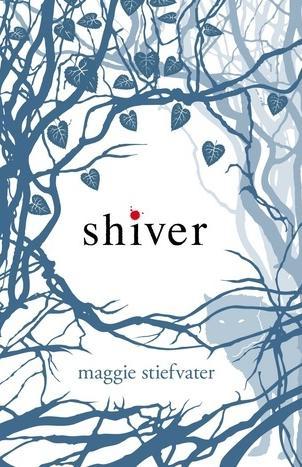
Shiver by Maggie Stiefvater

Summary and review:

Okay, here's the gist of Shiver: Ordinary teenage Girl meets, is in fact saved by, "Monster." Monster is not really a monster. Changed against his will from a human being, he longs to be human again and fights against the darker urgings that come with his new form. He joins with a group of fellow monsters, cobbling together a type of family, with a wise patriarch at its head who sets rules for the group and helps new monsters cling to their humanity. Monster and Girl fall desperately in love, and Girl wishes that she could be a monster, too. When that can't/won't happen, Girl then spends the rest of the trying to seduce Monster, who resists her advances despite his own desire.

Sound familiar? I know! The bare bones of Shiver are very similar to Stephenie Meyer's Twilight (yeah, like I had to give the author's name so that you'd know what I was talking about when I said Twilight). In fact, Sam, the main male character (who is a werewolf, not a vampire), even has yellow eyes. Actually, when I first read that about Sam I was like, "Crap. Stiefvater isn't going to pull a Stephenie Meyer and mention that repeatedly on every other page is she? Because seriously, I just won't be able to handle it." Fortunately however, although the yellow eyes were maybe mentioned a few more times than was strictly necessary, it never got too out of hand.

Anyway, yes, the basic plot of Shiver could be confused with Twilight, but, yellow eyes aside (okay, I guess, technically Edward's are amber. Whatever.), they are very much different books. I enjoyed reading Twilight; Stephenie Meyer is a great storyteller but let's be honest, she isn't going to be bringing home the National Book Award anytime soon. I don't necessarily think that Maggie Stiefvater is either, but her writing is, in my opinion, at least a little bit better.

The book is written with alternating points of view, switching off between Grace and Sam. I did find this distracting at times; instead of becoming lost in the story, I sometimes had to stop and remember who was narrating the chapter I was reading. However, the format made Sam a much more sympathetic character. I loved that I could see what was going on his mind, not just in Grace's. I could see why Grace fell in love with him, and I understood what was at stake because I actually knew and liked Sam. He was much more than just amber yellow eyes and the body of a young Greek god. (Okay, okay that was a low blow.) But the dual points of view didn't take away from the character development of Grace. Instead, it was made clear that she was her own person apart from Sam, and it made the longing between the two more stark by highlighting the lonely worlds in which they've grown up.

Stiefvater also put in bits of poetry, lines supposedly written by Sam, and excerpts from actual poets, particularly Maria Rilke, throughout the text. Parts of text were actually written in a kind of free verse form. Normally this would bug me, in Shiver, however, it did not. I thought Sam's poetry was sweet and romantic but not overly cheesy, and the lines from other poets were appropriate and furthered the plot rather than taking away from it.

The setting is beautiful, as well. You can feel the cold of the Minnesota winter sinking into you. It's in every way a perfect book to read while curled up on the sofa with a cup of hot cocoa. ★★★★★★☆☆☆ (7/10)

Content:

Blood and Gore: There are several wolf attacks in the book and a lot of blood everywhere all the time, it seems.

Sex: There is a lot of sexual tension going on between Sam and Grace, pretty much the whole time. No graphic descriptions, but Stiefvater makes it pretty obvious from the outset that something is going to happen. And it does. Oh, but don't worry, she makes sure to tell us that they used protection. Whew.

Language: There is quite a bit of blasphemy and some "minor" curse words. No f-word.